

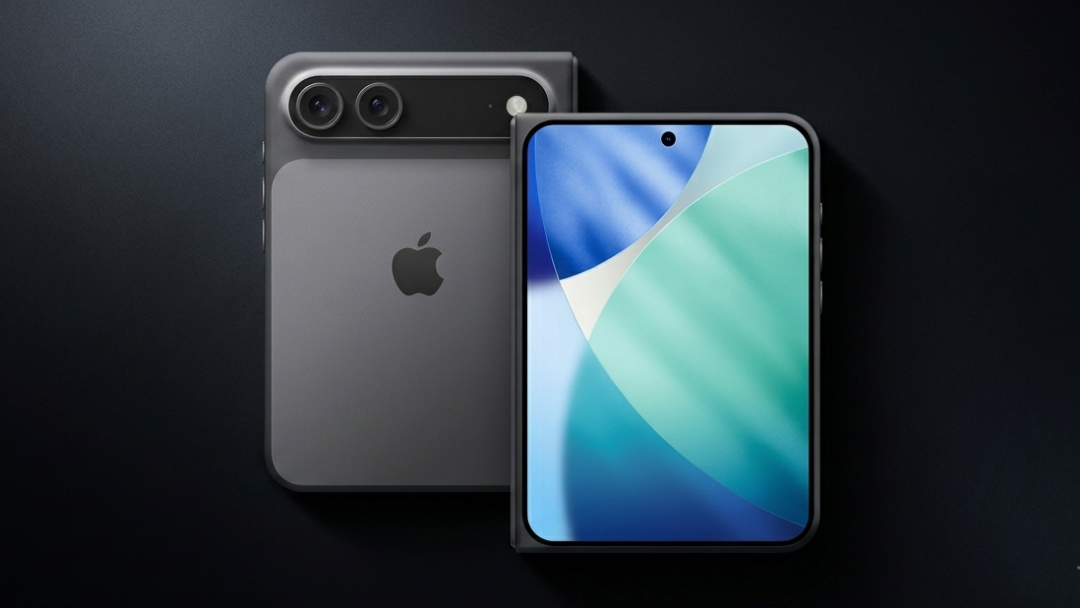
Apple's first foldable iPhone is edging closer to reality. Here's everything we know so far about the iPhone Fold's release date, price, design, and specs.
For nearly a decade, a folding iPhone has been the industry's favourite “maybe next year” story. Now, with barely two months left until Apple's usual September event, that story is entering its final chapter. Supply chain reports, carrier certifications, and a fresh wave of leaks in the past few days all point to the same conclusion: Apple's first foldable iPhone is real, it's imminent, and it's going to be both expensive and extremely hard to get.
Here's a clear breakdown of the release date, price, design, and specifications rumoured so far, updated with the latest reporting, and what's still genuinely up in the air.
When is the iPhone Fold releasing?
The headline date hasn't moved: September 2026, unveiled alongside the iPhone 18 Pro and iPhone 18 Pro Max. What has changed in the last few days is the expected gap between announcement and actual availability.
According to supply chain analyst Ming-Chi Kuo, Apple may effectively “repeat the iPhone X story.” Back in 2017, the iPhone 8 and 8 Plus went up for pre-order just three days after their September unveiling, while the iPhone X, that year's headline device, didn't open for pre-order until six weeks later. Kuo believes Apple's foldable could follow the same pattern: shown off in September alongside the rest of the lineup, but not actually orderable until the fourth quarter, with deliveries potentially stretching 4–6 weeks or longer after that.
The reason comes down to supply. Kuo's latest estimate puts total foldable iPhone shipments for the second half of 2026 at just 7–8 million units, with only 500,000 to 1 million of those ready in time for the September quarter, a fraction of the 20–22 million iPhone 18 Pro and Pro Max units expected in the same window. Separately, Nikkei has reported Apple asked suppliers to prepare for as many as 10 million units across the full year, though even that figure is described as a target suppliers expect could flex depending on early demand. Either way, the consistent theme across every recent report is the same: expect a headline-grabbing September reveal, but very limited stock, and a real possibility of pre-orders sliding into October or later.
iPhone Fold Price: What Will It Cost?
Pricing has actually moved up in the most recent reports, not down. Earlier in 2026, several outlets had converged on a $1,999 starting price. But Ming-Chi Kuo's latest note, one of the most closely watched in the supply chain, reaffirms a higher $2,299 to $2,499 starting range, and a handful of Weibo leakers tracking Chinese pricing point in the same direction.
Taking the fuller range of recent reporting into account:
- Starting price: likely somewhere between $1,999 and $2,499, with the most recent analyst estimates skewing toward the higher end
- 512GB configuration: roughly $2,199–$2,600
- 1TB configuration: roughly $2,399–$2,900
Either way, this will be the most expensive iPhone Apple has ever sold, comfortably ahead of the current Pro Max lineup, and priced closer to a MacBook Pro than a phone. Treat exact figures as directional until Apple confirms them at the September event, but a starting price north of $2,000 now looks all but certain, with a real chance it lands above $2,300.
Design: A Book-Style Fold, Not a Flip
Every leak so far agrees on the fundamentals: this is a book-style foldable, similar in concept to Samsung's Galaxy Z Fold line, rather than a vertical flip phone.
Expected design details include:
- Inner display: roughly 7.6–7.8 inches, closer in proportion to an iPad mini when unfolded
- Outer display: roughly 5.3–5.5 inches, wider and shorter than a standard iPhone screen
- Frame: a titanium and aluminium hybrid, with titanium for structural strength at the hinge and aluminium elsewhere to manage weight and heat
- Thickness: around 4.5–4.8mm unfolded, closer to 9–9.5mm when folded
- Camera plateau: a long, thin bar on the back, visually similar to the iPhone Air, rather than the squared module on current Pro models
The detail generating the most attention, though, is the display itself. Samsung Display is reported to hold a multi-year exclusive supply deal for the panel, built around a new hinge and layer-stack designed to virtually eliminate the crease that has defined every book-style foldable to date. If Apple delivers on that even partially, it's likely to be the single biggest talking point at launch.
Specs and Features
Based on the leaks compiled so far, here's what the first-generation iPhone Fold is expected to offer:
- Chip: A20 Pro
- Cameras: Dual 48MP rear cameras (wide and ultrawide), with no dedicated telephoto lens, likely due to space constraints inside the folding chassis
- Front cameras: Dual selfie cameras, one for the outer display and one for the inner display
- Biometrics: Touch ID rather than Face ID, a break from every current iPhone
- Battery: Estimated at 5,000–5,800mAh, potentially the largest battery ever fitted to an iPhone
- Cooling: A vapour chamber, despite the device's slim profile
- Software: iOS 27, unveiled at WWDC 2026, already contains early code references pointing to foldable-specific features, including a landscape multitasking mode said to resemble split-screen tools on other tablets and foldables.
What's Still Uncertain
A few things haven't settled yet, and are worth watching as September approaches:
The name: “iPhone Fold” is simply the rumour mill's working label. “iPhone Ultra” has been suggested repeatedly and would sit well alongside Apple's existing “Air” and “Pro” naming, and would also sidestep direct comparison with Samsung's “Galaxy Fold.”
Launch-day supply: With Q3 shipments estimated at as low as 500,000–1 million units globally, this may be one of the tightest first-week supplies of any modern iPhone. Kuo has even floated the possibility of units reselling for 50–100% over retail in the first weeks, similar to early scalping seen on other constrained launches.
Carrier and trade-in strategy: A device priced above $2,000 typically needs strong trade-in and instalment offers to sell at scale, and Apple hasn't signalled anything on this front yet.
Competitive pricing pressure: Samsung's Galaxy Z Fold 8 lineup lands just weeks earlier, with European pricing reportedly starting around €1,999 for its new wider “Wide” model and climbing to roughly €2,399 for the Ultra tier, numbers that will likely shape how Apple's pricing is received when it's finally confirmed.
Is It Worth Waiting For?
That depends entirely on what you're looking for. A first-generation folding iPhone will almost certainly carry first-generation compromises: no Face ID, no telephoto lens, a premium price, and the inherent unknowns of a brand-new form factor. For early adopters, though, it also represents Apple's most ambitious hardware move in years, a genuinely new way to use an iPhone, not just a bigger screen on the same shape.
Whichever way Apple's foldable lands this September, one thing is already clear: it will be Apple's boldest and most expensive iPhone yet, and very likely one of the most talked-about launches of the year.
Whatever the final name and spec sheet turn out to be, one thing is certain. A device this significant deserves to look as exceptional as it performs. At Craft by Merlin, we'll be watching the iPhone Fold's launch closely, ready to bring our signature hand-painted artistry to Apple's most ambitious device yet.


